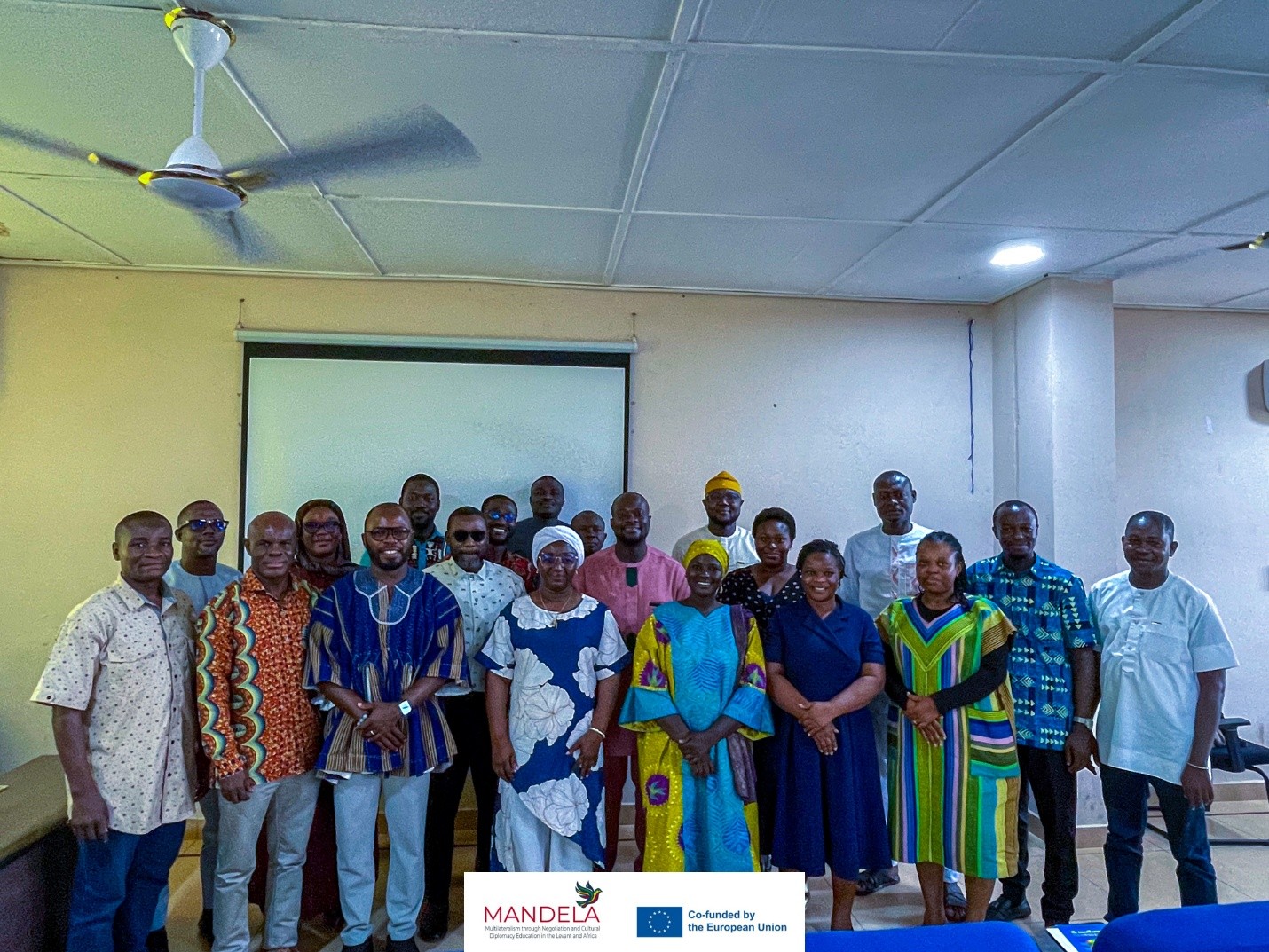
The University for Development Studies (UDS) has trained 20 lecturers in Values-based Knowledge Education (VaKE) and 21 in Cultural Diplomacy as part of efforts to strengthen innovative teaching and learning approaches in higher education.
The full-day training, held on Friday, 23 October 2026, at the Faculty of Law Auditorium, brought together lecturers from various faculties of the University under the European Union-funded MANDELA Project. Although 27 faculty members registered for the programme, 21 participated in the training.
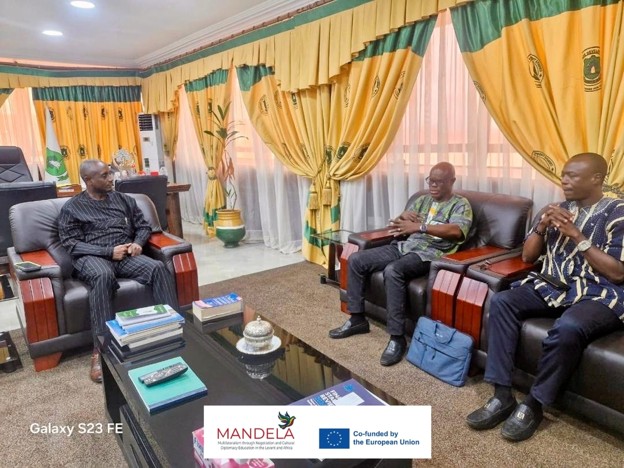
The Principal of the Nyankpala Campus, Prof. Ibrahim Yakubu Seini, also participated in the training, which focused on equipping academic staff with practical approaches to integrating intercultural understanding, values reasoning and innovative pedagogies into their teaching.
Promoting Innovative Teaching and Learning
Opening the training, Prof. Edward S. Mahama reaffirmed UDS's commitment to translating the knowledge and experiences gained through the project's international training activities into practical improvements in teaching and learning.
He emphasised the importance of ensuring that the University's participation in international academic collaborations produces meaningful institutional benefits, particularly through knowledge transfer and the adoption of innovative teaching approaches.
VaKE: Encouraging Critical Thinking and Values Reasoning
The first session focused on Values-based Knowledge Education (VaKE), facilitated by Hardi Shahadu and Prof. Courage Saba.
VaKE is an innovative pedagogical approach that combines moral dilemma discussions with knowledge acquisition. It encourages students to examine real-life ethical situations, take positions, identify relevant information, conduct research, engage with differing perspectives and critically evaluate their arguments.
During the session, participants worked through a scholarship dilemma previously used at the MANDELA Project's Training of Trainers workshop in Linz, Austria.
Working in groups, lecturers examined the dilemma, presented and defended their positions, identified knowledge gaps and engaged in discussions to test their arguments against alternative perspectives.
The practical exercise also introduced participants to developing context-specific dilemmas that could be integrated into their respective academic disciplines.
In explaining the importance of differing perspectives in dilemma-based learning, Prof. Courage Saba highlighted how individuals interpret situations differently based on their backgrounds, experiences and values. He emphasised that such differences make dialogue, critical reflection and shared understanding essential components of the learning process.
Similarly, Hardi Shahadu highlighted the importance of informed negotiation and understanding how individual positions and decisions affect others. He encouraged lecturers to help students develop the ability to engage constructively with differing opinions and make informed decisions.
Cultural Diplomacy: Promoting Intercultural Understanding
The second session focused on Cultural Diplomacy and was facilitated by Dr. Ibrahim Mohammed Gadafi and Dr. Tahiru Rahaina.
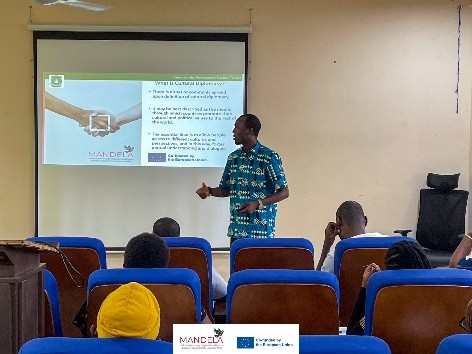
Dr. Ibrahim Mohammed Gadafi
The facilitators explored how culture, dialogue and exchange shape relationships between individuals, communities, institutions and nations. They also discussed how lecturers can incorporate cultural diplomacy principles into their respective courses to promote intercultural understanding and more inclusive learning environments.
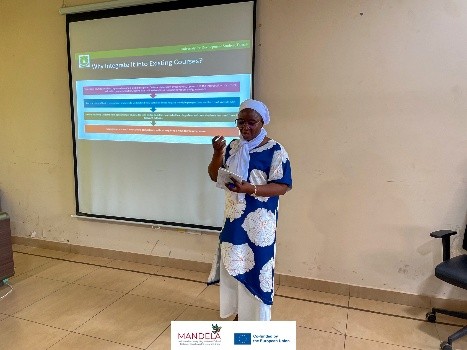
Dr. Tahiru Rahaina
Emphasising the need to align teaching approaches with intended learning outcomes, Dr. Ibrahim Mohammed Gadafi noted that lecturers do not necessarily have to adopt every approach introduced during the training. Rather, they should select and apply methods that best support the objectives of their courses and the outcomes they seek to achieve.
UDS Leadership Calls for Practical Application
In his remarks, the Principal of the Nyankpala Campus, Prof. Ibrahim Yakubu Seini, commended the UDS MANDELA Project team for organising the training and providing academic staff with the opportunity to acquire new teaching approaches.
He stressed that educators must be intentional about the methods they use to transmit knowledge and the individuals who ultimately apply that knowledge.
He further encouraged lecturers to become global-minded educators who prepare students to engage responsibly with diverse societies and understand the experiences and perspectives of others.
According to him, adopting more reflective and inclusive teaching approaches can contribute to changing how educators approach their responsibilities and improve the overall teaching and learning experience.
The Principal urged participants to put the knowledge gained into practice and share their experiences with colleagues to promote wider adoption across the University.
Building on Existing Teaching Practices
The training also provided an opportunity for participants to reflect on their existing teaching experiences. Some lecturers acknowledged that they already apply elements of VaKE in their teaching, highlighting the relevance and practical potential of the approach within different academic disciplines.
The facilitators encouraged participants to deliberately incorporate VaKE into their courses, particularly by using dilemma-based discussions to stimulate critical thinking, encourage informed decision-making and promote engagement with different viewpoints.
At the close of the training, participants completed the MANDELA Project feedback survey to provide insights into their learning experiences and the relevance of the sessions to their academic responsibilities.
Strengthening UDS' Contribution to the MANDELA Project
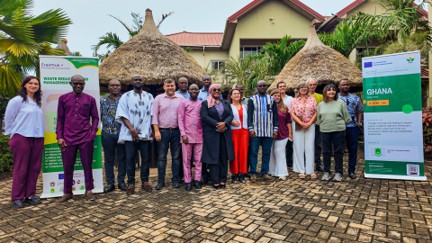
The training forms part of UDS's institutional capacity-building activities under the MANDELA Project, an Erasmus+ Capacity Building in Higher Education initiative co-funded by the European Union.
The project brings together higher education institutions and organisations from Ghana, Ethiopia, Israel, Austria, Germany and Romania to promote intercultural understanding and strengthen cultural diplomacy education through innovative pedagogical approaches.
Its four core methods include Cultural Diplomacy, Values-based Knowledge Education (VaKE), Conflict Resolution (CoPoweR) and Collaborative Online International Learning (COIL).
Through its participation in the project, UDS is committed to strengthening academic capacity, promoting knowledge exchange and ensuring that the approaches developed through international collaboration are shared and applied within the University.
The faculty training represents an important step towards translating the project's international learning experiences into practical classroom approaches that can enhance teaching, learning and intercultural engagement across UDS.
Building capacity. Inspiring innovation. Transforming teaching and learning.
About the MANDELA Project
The MANDELA Project is an Erasmus+ Capacity Building in Higher Education project co-funded by the European Union. It promotes intercultural understanding and cultural diplomacy education through collaboration among partner institutions in Ghana, Ethiopia, Israel, Austria, Germany and Romania.
The project focuses on four pedagogical approaches: Cultural Diplomacy, Values-based Knowledge Education (VaKE), Conflict Resolution (CoPoweR) and Collaborative Online International Learning (COIL).
At UDS, the project also contributes to institutional capacity development, with the University leading the Dissemination, Exploitation and Sustainability work package to promote the visibility, uptake and long-term impact of project results.
View your student profile, register your courses, etc.
Access learning material on the University's e-Learning platform
Access the University library's resources
Search for and view staff profile